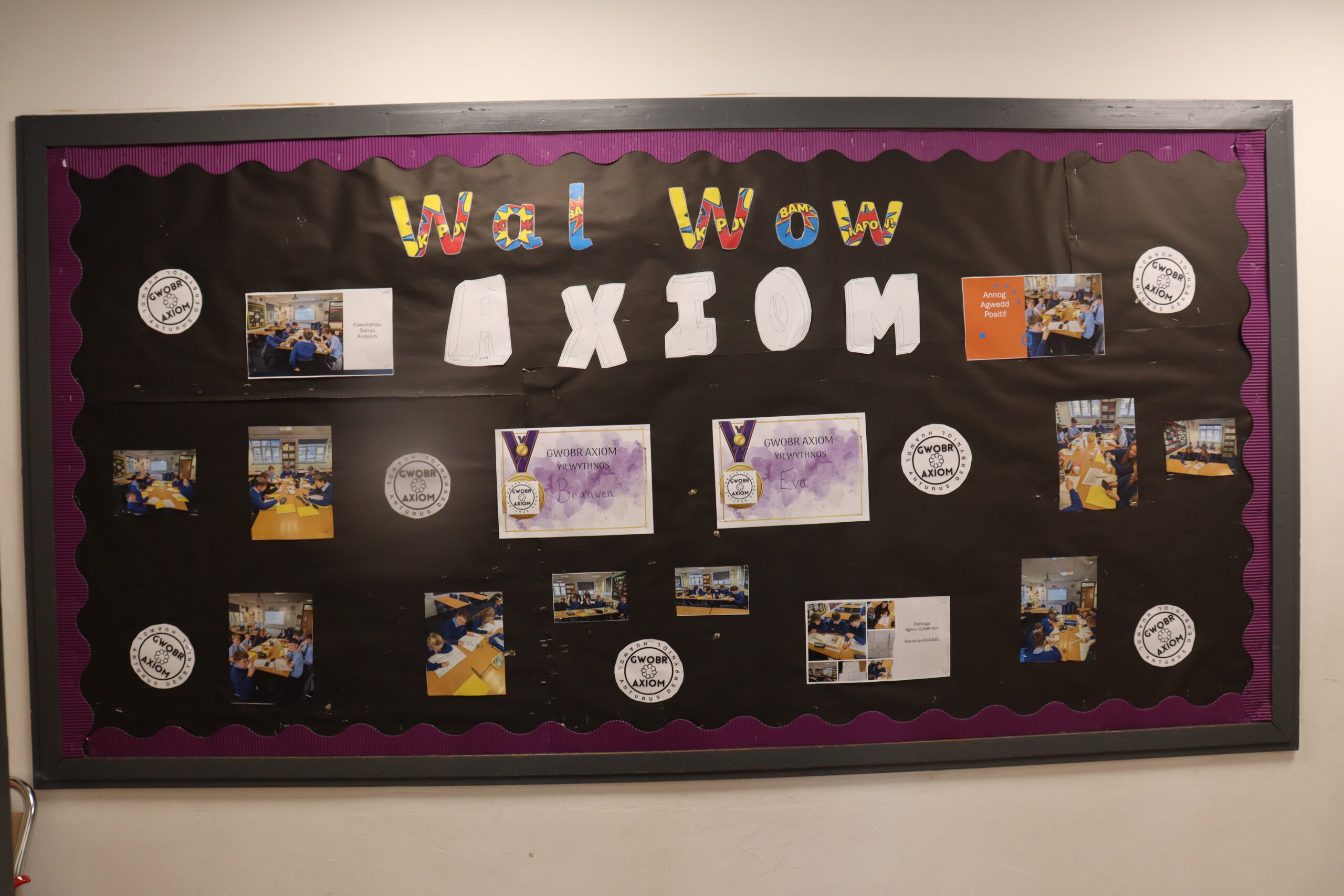
At Ysgol Gymraeg Ystalyfera in the Swansea Valley, Ms Pocock leads maths circles for Years 7-9. Her creativity within the school context has supported pupils and the programme to thrive.
Maths in two languages
Ysgol Gymraeg Ystalyfera is a Welsh-medium school, and the maths circles reflect that. Pupils move naturally between Welsh and English across a session—discussing problems in Welsh, working through mathematical terminology in English, and switching between the two.
For one Year 8 pupil, the bilingual environment surfaced something surprising: “I forget the basic things in English but I know the more complicated terms in English.” These pupils are doing maths in their own language, in their own way.
Making it official
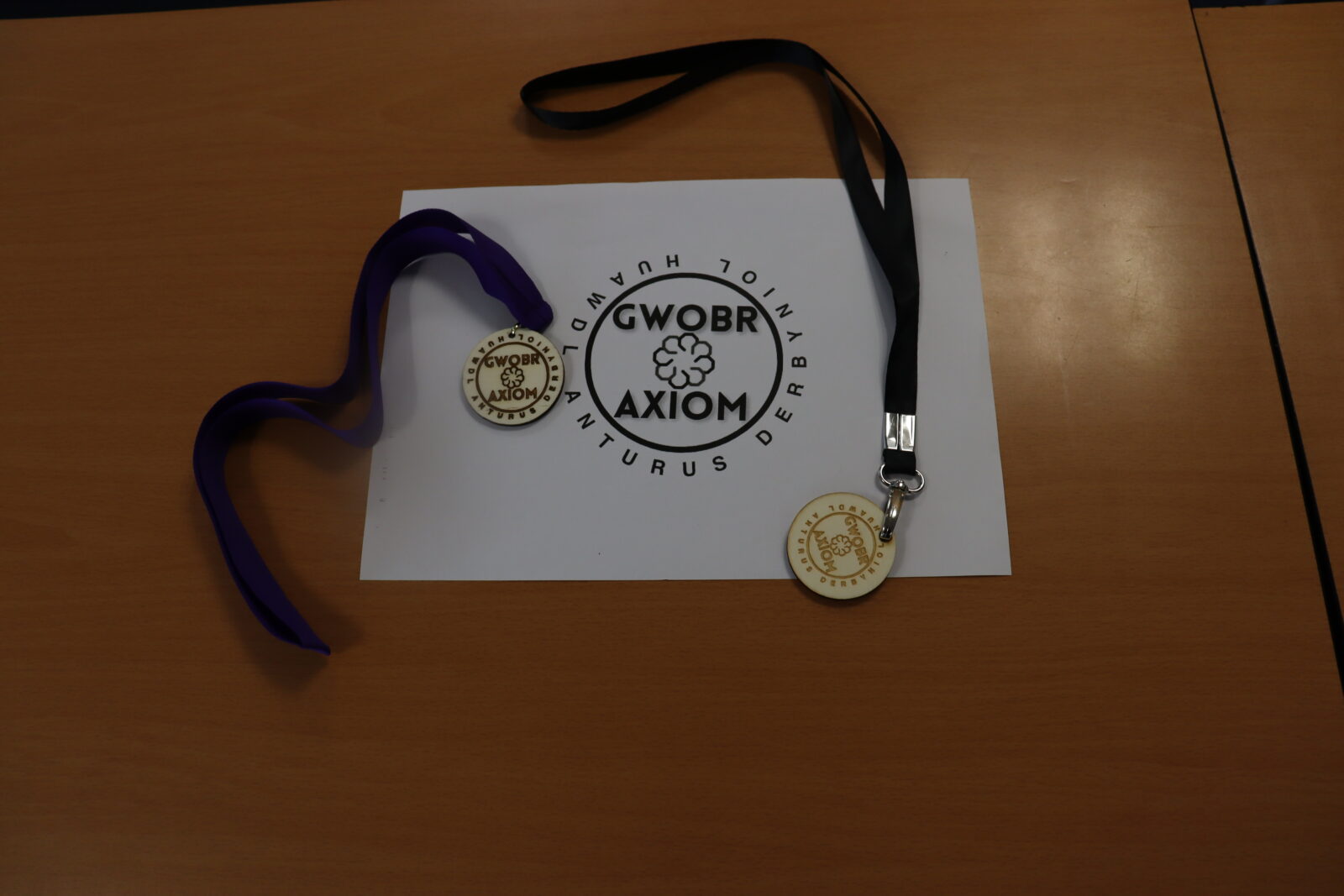
The school introduced the Axiom Award, a 3D-printed medal made by the school’s technology department and worn on a lanyard. Pupils receive one when they’ve shown the three A’s — Articulate, Adventurous, and Accepting — across a session.
Pupils take the medals home to keep. One Year 9 pupil described telling her parents: “They were really happy when I told them. They were like, that’s so official and nice.”
Another described receiving the award as recognition of something that already mattered to her: “It’s the same thing as going to the maths circle in the first place…you know that you’re doing good, and it’s a recognition of that.”
Extra maths with friends
The award feeds into a wider sense of belonging within the year groups. Year 9 pupils have a WhatsApp group to remind each other about sessions. At Christmas, the whole cohort went to the cinema – a trip earned through consistent attendance and commitment across the year.
Ms Pocock explains, “We are trying to make a little community with the circles and the groups.”
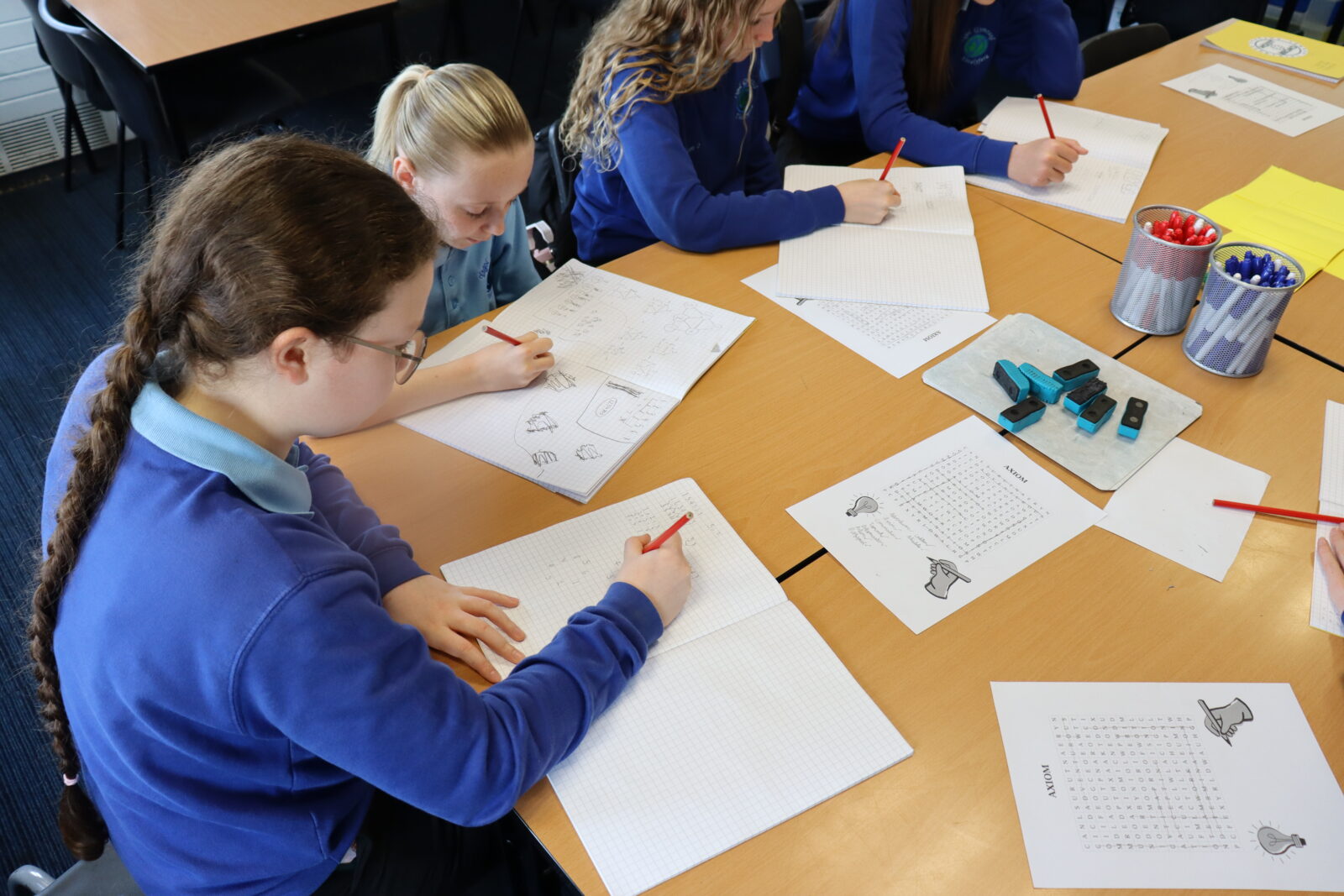
Pupils describe maths circles as something clearly different from their normal lessons. “It’s a lot more teamwork and a lot more logic and problem solving,” one Year 8 pupil said. “In a normal lesson, everyone does the same thing at the same pace. Here, we work together and use each other’s ideas and build up each stage.”
The sessions feel more challenging. “It’s more satisfying than in normal maths because it’s harder. Your brain works harder.” Another summed up maths circles: “Extra maths with friends!”
When something clicks
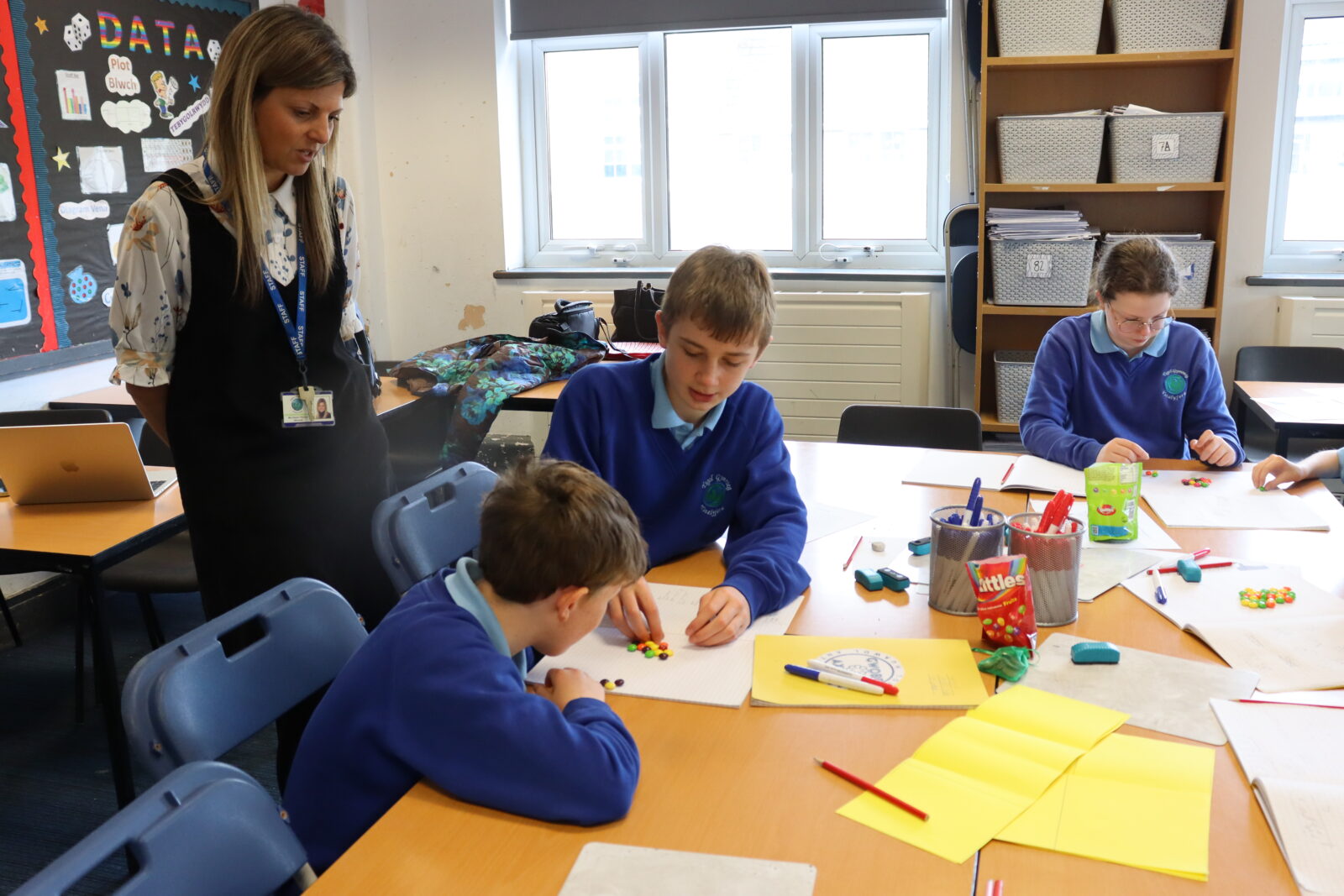
The confidence pupils build in maths circles is travelling into the rest of school. When the Junior Maths Challenge came around this year, pupils approached it differently. “Usually they’re quite daunted,” Ms Pocock says. “But they were more ready to attack the problems this year.”
For one Year 9 pupil, learning to accept mistakes has shifted how she approaches challenges beyond maths too. “Before, it was like: this is as good as I can get it. But now, I know what I can do better.” She’s carrying that into other subjects like English too.
She described the moment when something in maths finally clicks: “Your brain’s a complete muddle and mess, just a big scribble all through your brain, and then it’s all gone…and you’re, like ‘Oh, that’s how I do it!’”
“Since the beginning of the year to the end, they’ve really come out of their shells.” Ms Pocock shared.
An experience for everyone
Ystalyfera timetables maths circles within the school day. For a school in a rural valley with limited transport after school, this has made a real difference to who can take part.
Ms Pocock added. “It is definitely a benefit for the school and for the children. It’s something really different. It’s great experience for myself as well — to be able to mix with the children in a different way than you would in a whole class situation.”