
The transition from primary to secondary school can make or break a pupil’s attitudes towards maths and school.
Pupils arrive in Year 7 full of optimism. Within months, for many high-attaining pupils, that optimism fades.
Our research tracked high-attaining pupils (those scoring above 110 in their SATs) from more advantaged (ABC1) and less advantaged (C2DE) socio-economic backgrounds, measuring attitudes and perceptions from the end of Year 6 through to the end of Year 7.
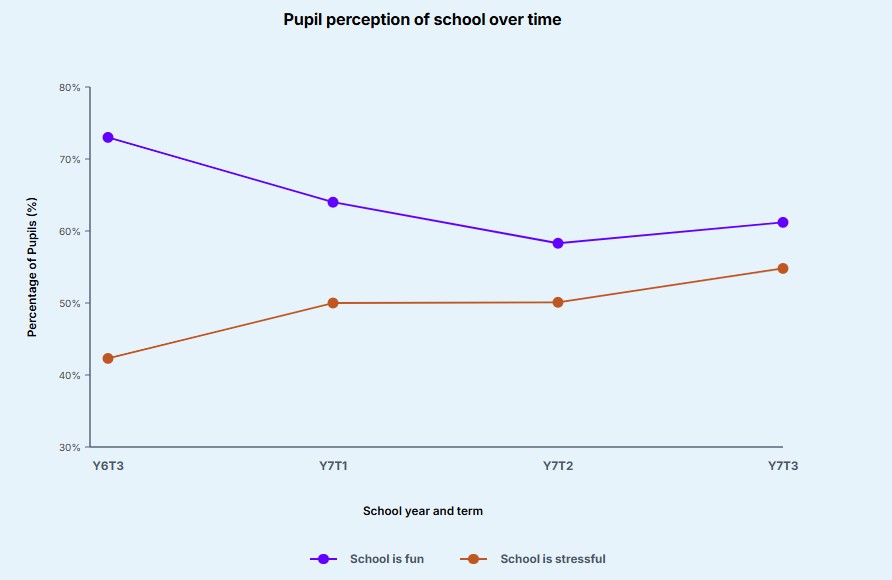
A pattern of decline. The “secondary school honeymoon” is short-lived. By Term 2, pupils saying “school is fun” drops from 73% in Year 6 to 58% and stress rises from 42% to 50%. And the gap between pupils from more and less advantaged backgrounds widens sharply and quickly.
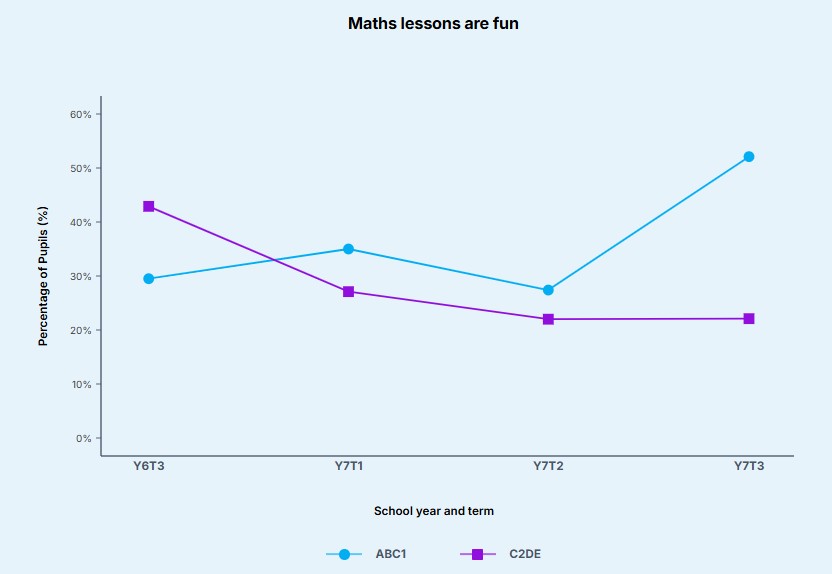
At the end of primary school, high-attaining disadvantaged pupils are more likely to say that their maths lessons are fun than advantaged pupils. By the end of Year 7, that flips entirely. Just 22% of less advantaged pupils find maths lessons fun, compared to 52% of more advantaged pupils.
Confidence gap widens. Despite starting the year at the same academic standard, levels of confidence are vastly different between groups. ABC1 pupils consistently report higher confidence (49%–51%) than C2DE peers (40%–43%). This is measured by how many pupils report, “I usually learn maths quickly.”
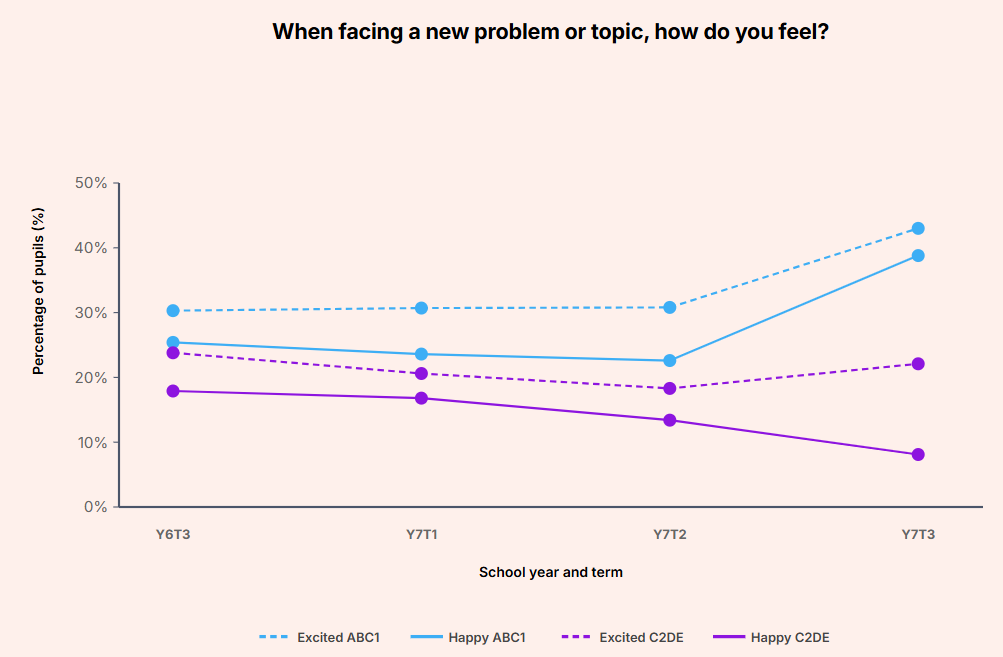
When facing a new problem or topic, the gap in how happy or excited pupils feel widens from under ten percentage points to around thirty across the course of the year.
The classroom experience is not equal. The curriculum and teaching may be consistent, but what pupils actually experience in the classroom is not. Less advantaged high-attaining pupils report significantly more disruption and fewer opportunities for maths discussions and debates than their more advantaged peers.
Families feel it too. There is a mirror effect between pupil and parent confidence. Parental trust in maths teachers falls from 80% at the end of Year 6 to 74% by Term 3. Parents of less advantaged pupils are more likely to express uncertainty about their child’s progress. When family confidence and pupil confidence dip together, challenges compound.
This is not a story about disadvantaged pupils liking maths less. It’s a story about what happens when their enthusiasm hits secondary school. The encouraging news is that these changes are predictable. And predictable means preventable. If we understand when and why the dip happens, we can act before confidence calcifies and trajectories set.
Interested in partnering with Axiom Maths? Express your interest here